Founder's testimony
The inner origin of Beith David, carried with faithfulness and responsibility.
An encounter, a calling
Some encounters are never forgotten. They open a path.
On the 15th of Av 5773, David Raphaël, founder of Beith David, met Shmouel.
Even before this encounter, Shmouel had announced to those close to him that he was waiting for a Frenchman then in Israel, who would come to see him in his room before Tishri 5773.
That is exactly what happened.
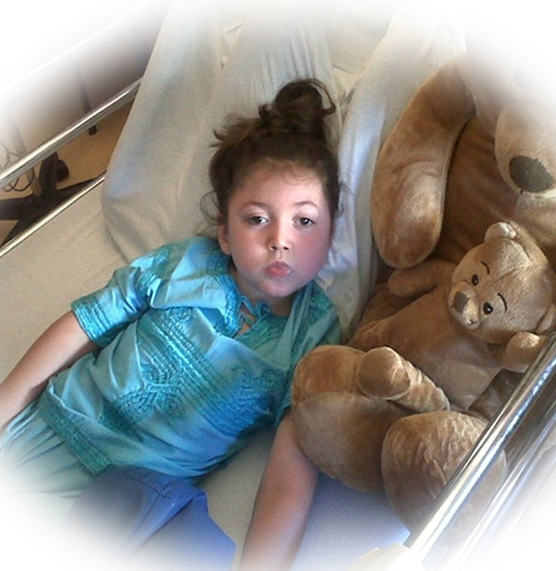
Shmouel was a young child affected by cerebral motor disability, deprived of ordinary speech. Since his birth, he had lived in a specialised hospital room, surrounded by the care necessary for his survival.
He had not grown up like other children. He had not studied Torah in a school. He had not discovered the world through ordinary paths.
And yet, through facilitated writing, he transmitted messages of overwhelming depth about Israel, the Torah, the Geulah and the spiritual state of the world.
What struck those close to him was the gap between his apparent condition, his absence of ordinary study, his isolation since birth, and the depth of what he wrote.
This encounter marked David Raphaël deeply. It awakened in him a consciousness present since childhood: to serve the Torah, Israel, the Geulah, the Davidic kingship, justice and peace.
An assumed origin
Beith David does not hide this origin. It is part of its founding fire.
It is not a fabricated argument, nor a communication strategy. It is the place from which the fire rose: a hospital room, a child whom the world did not expect, and a word turned toward Israel, Jerusalem, the Geulah, Malkhut Israel and the return of a wisdom capable of illuminating the people.
Each person remains free to receive this testimony according to their own conscience. Beith David does not make it an imposed proof, nor an institutional authority. But it would be wrong to conceal its force: this memory gave birth to a responsibility.
Facilitated writing
Shmouel communicated through facilitated writing: a person accompanied his hand so as to allow him to write what he could not say by speech.
This mode of communication is known and discussed. It is mentioned here simply to clarify the framework of the testimony.
In the case of Shmouel, what struck those who approached him was the striking gap between his apparent condition and the depth of what he wrote.
The first words
The first words
Among the first words transmitted through facilitated writing, while Shmouel was still in hospital, those close to him report this simple and overwhelming sentence:
"I love you, Mum. I am the Guardian of the Torah."
Shortly afterwards, when the specialised institution cut his hair, Shmouel also wrote:
"I am the gilgul of a nazir. My hair must not be cut."
The word gilgul designates, in Jewish tradition, a return of the soul. A nazir is, according to the Torah, a person consecrated by a particular vow, notably obliged not to cut his hair. From that day on, Shmouel's hair was no longer cut.
This detail is not presented as a proof to be imposed. But those who know the history of Israel will naturally hear the resonance with Shmouel HaNavi, consecrated even before his birth, of whom Hannah declared: "no razor shall come upon his head" (I Samuel 1:11).
The encounter with David Raphaël
At their first meeting, David Raphaël reports having received from Shmouel a sentence that transformed his life:
"Your true life begins now. You were the last missing link."
This word was not received as a title, nor as a personal claim. It was received as a responsibility: to serve a vision greater than oneself, turned toward Israel, Jerusalem, the Torah, the Geulah, Malkhut Israel and the restoration of a word of wisdom for the people.
A year alongside Shmouel
After this encounter, David Raphaël stayed close to Shmouel for about a year.
From this very encounter, even though he had never left his specialised hospital room since his birth, Shmouel wrote a phrase that marked his loved ones deeply: "I am going to make my globalisation."
During this period he wrote abundantly. His messages spoke of the Geulah, of Israel, of the nations and of the role of our generation.
Later, according to the account transmitted by those close to him, Shmouel presented himself as linked to the prophet Shmouel and asked that his books — Samuel I and Samuel II — be read. Beith David transmits this account with respect and reverence, without making it a declaration of authority.
This year was decisive. It gave David Raphaël the consciousness that this word was not meant to remain enclosed within a single room.
The word of Shmouel
Shmouel's messages were simple in their axis, but very powerful in their scope.
He spoke of the Geulah as a reality already sealed in heaven. He called Israel to prepare itself, to return to the Torah, to strengthen teshuvah, to rediscover its bond with the Land of Israel and to move forward as one single heart.
He also spoke of the "true world": a world in which the presence of G-d, justice and truth would no longer be hidden.
To the nations, his message held in a single sentence: to make of G-d the truth of this world.
The heart of his message was simple: Israel must prepare itself, return to the Torah, recover its land, and make of G-d's truth a light for the world.
These words are transmitted because they lit a fire that has not since been extinguished.
From the room to the people
The sentence "I am going to make my globalisation" then took on a concrete meaning.
Shmouel's messages were transmitted to Jews in France, in Israel and elsewhere. Eighteen conferences were held throughout the Paris region, generally gathering between 50 and 150 people.
Many came out of curiosity. Many left deeply moved. In some, this word awakened the desire to return to Israel; in others, it accelerated a path of Aliyah already underway.
The echo reached Israel, where several spiritual figures were informed of Shmouel's story.
For Beith David, this remains a powerful sign: a word born in a child's room, carried by a being deprived of ordinary speech, was able to reach far beyond what circumstances seemed to allow.
A clarity turned toward the Geulah
Many of those who approached Shmouel felt in his word an unusual clarity, turned toward the Geulah, teshuvah and the preparation of Israel.
Some perceived in it a prophetic dimension.
This testimony does not need to be imposed. It is transmitted for what it brought to birth: a fire of Torah, of Geulah and of faithfulness to Israel.
The axes of Shmouel's message
One sentence sums up the spirit of his message: "You must move forward as one single heart in Israel."
The Geulah
Shmouel spoke of the Geulah as a reality that G-d advances in history, calling Israel to prepare inwardly.
The return of Israel
He called the Jewish people to rediscover its living bond with the Land of Israel, a place of blessing and spiritual preparation.
The true world
He spoke of a “true world” in which the presence of G-d, justice and truth would no longer be veiled.
One single heart
His message called Israel to move forward as one single heart, in the Torah, teshuvah and unity.
To warn, not to convince
To transmit without forcing: to warn, then to leave each one before his own free will.
The nations
To the nations, his message was to make of G-d the truth of this world, source of morality, dignity and peace.
Malkhut Israel
His message awakened a consciousness of Malkhut Israel: not political domination, but an order of Torah, of divine service and of collective life.
His Aliyah and his encounters in Israel
In May 2015, at his request, Shmouel made his Aliyah with his loved ones. The one who called Israel to return to its land thus inscribed his own path into the return of Israel.
He then asked to meet several great tsadikim of Israel in order to transmit to them a personal message linked to the Geulah. He was received by Rav Chaim Kanievsky, Rabbi Amos of Netanya, Rav Yitzchak Ginsburgh and Rav Shalom Arush. These encounters were lived with wonder, respect and emotion, in an exchange of blessings.
These encounters are mentioned with respect, without making them an argument of authority.
A few days later, Shmouel asked to go to the Kotel with his mother and David Raphaël, founder of Beith David.
The following night, on the 6th of Av 5776, he left this world in his room.
His word was not extinguished with his departure. It left in hearts a torch: to prepare the people for the Geulah, to make of the Torah a living word, to recall the return of Israel and to serve G-d with truth, justice and peace.
What this memory brought to birth
For David Raphaël, founder of Beith David, this encounter was not the beginning of a claim. It awakened a consciousness present since childhood: to serve the Torah, to honour the masters of Israel, to make known the wisdom of Jerusalem and to contribute to the spiritual restoration of the people.
Beith David was born in the continuation of this memory: an initiative of diffusion and transmission, faithful to the sages of Israel, called to revive a consciousness of Torah, of justice, of peace and of Malkhut Israel.
"The fire of origin must not become a claim; it must become a light."
To go further
The testimony presented here recounts the inner origin of Beith David. For those who wish to go further, two complementary approaches are offered: discovering the archives of Shmouel, or deepening the teachings carried today by Beith David.
Archives of Shmouel
Find Shmouel's life, his messages, his public discourses, the testimonies and archives that allow a deeper understanding of the founding testimony presented here.
The teachings of Beith David
Deepen the vision carried by Beith David through its teachings, courses and reflections on the Torah, Israel, Jerusalem, the Geulah and Malkhut Israel.
To situate this phenomenon
The story of Shmouel does not stand in a vacuum. In the Jewish world, accounts linked to persons deprived of ordinary speech have already marked consciences, notably around the Torah, the soul, teshuvah and the Geulah.
French-speaking Jewish platforms have addressed this subject, and academic works have studied the spiritual use of facilitated communication in certain Israeli Orthodox milieus.
These references do not prove the story of Shmouel and ground no authority. They simply show that the subject of communication by persons deprived of ordinary speech has already been addressed in the Jewish world, with interest and prudence.
Documentary resources
- Torah-Box — 7 messages d'autistes
- Juif.org — La Torah et le message des autistes… compatibles !
- Chabad.org — The Son Who Cannot Ask
- Chabad.org — The Rebbe and a Young Man With Autism
- Yoram Bilu & Yehuda C. Goodman — What Does the Soul Say? Metaphysical Uses of Facilitated Communication in the Jewish Ultraorthodox Community